
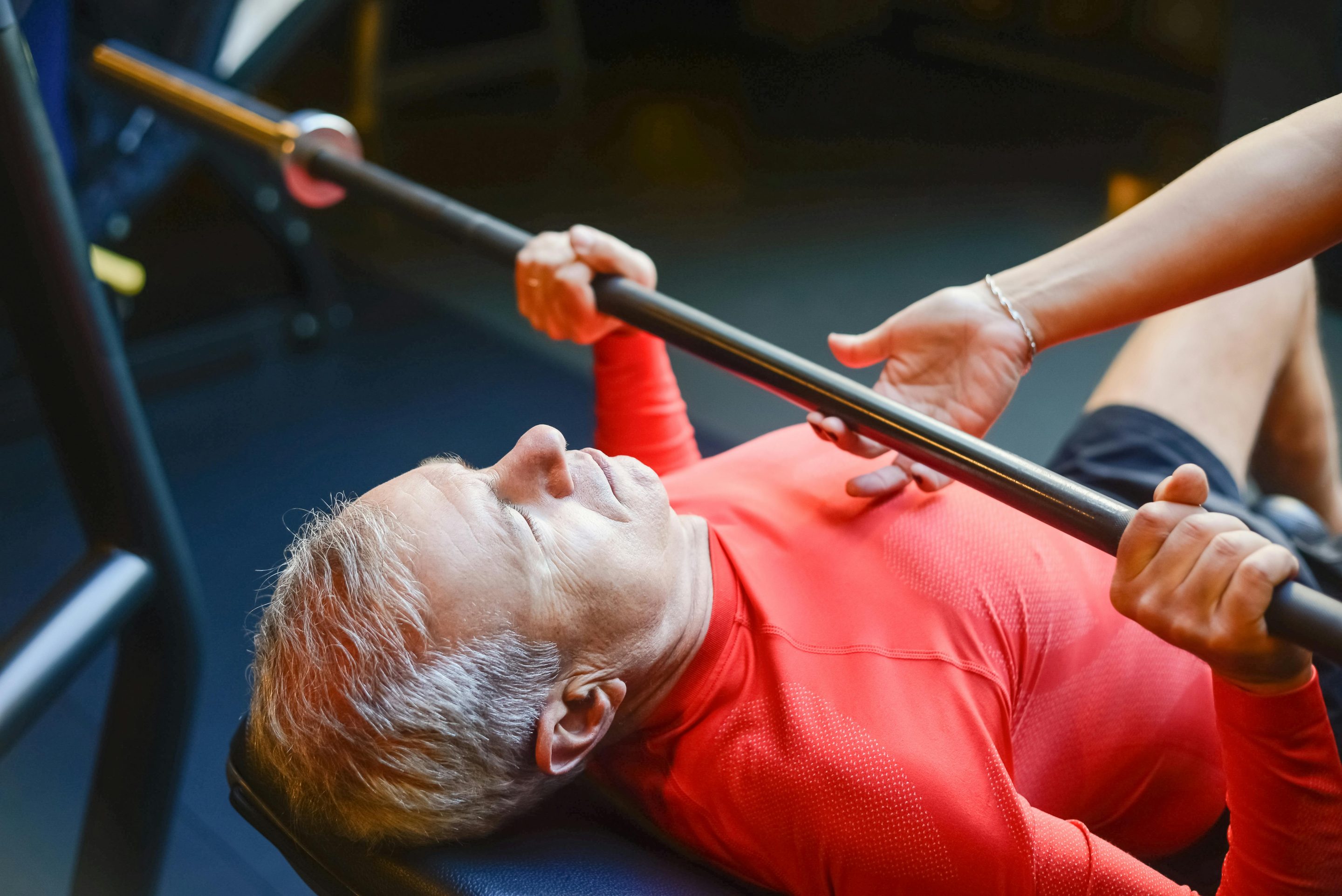
Choosing the right personal trainer becomes more important as you age, not less. After 60, your body requires specialized attention that most trainers simply aren’t equipped to provide. The wrong approach can lead to injury, discouragement, or wasted time on programs that don’t address what actually matters for maintaining independence and quality of life.
At Studio Fitness, we’ve spent decades working exclusively with adults who need training that prioritizes safety, mobility, and long-term strength over quick fixes or aesthetic goals. This guide will help you identify qualified fitness professionals in Santa Rosa who understand the specific needs of older adults.
You’ll learn what separates generic fitness instruction from age-appropriate programming, the certifications that matter, questions that reveal a trainer’s true experience, and why the training environment itself plays a major role in your success.
Why Generic Fitness Training Doesn’t Work for Seniors (And What Actually Does)
Your body at 60 functions differently from it did at 30, and pretending otherwise creates real risk. Most standard workouts for seniors fail because they’re simply scaled-down versions of programs designed for younger populations.
After 50, muscle mass decreases at an annual rate of 1-2% without resistance training. Balance systems decline, joint cartilage thins, and bone density decreases. These aren’t cosmetic changes; they directly impact your ability to walk confidently, recover from stumbles, and maintain independence.
The Biggest Difference: Purpose Over Appearance
Most fitness training focuses on appearance: building visible muscle, losing weight, and achieving a certain look. Personal trainers for seniors programs should instead focus on functional strength–the kind that lets you get up from a chair without assistance, carry groceries without strain, and navigate stairs with confidence.
Three Critical Mistakes Big-Box Gyms Make
- Assigning trainers based on availability rather than specialized experience. A 25-year-old trainer fresh from certification typically lacks the knowledge to modify exercises for arthritis, osteoporosis, or past injuries.
- Using standardized programs that emphasize high intensity and rapid progression. Older bodies build strength differently—they need controlled movements, longer recovery periods, and careful attention to form over speed.
- Creating intimidating environments that discourage consistency. Loud music, crowded spaces, and equipment designed for young athletes make many older adults uncomfortable enough that they simply stop showing up.
What Actually Works
Effective training for older adults combines:
- Slower movement speeds with consistent progressive resistance
- Balance work as important as strength work
- Mobility training that addresses stiffness limiting daily movement
- Flexibility to adjust when health issues or life events interrupt training
The goal isn’t to lift the heaviest weight possible but to control the weight throughout the entire range of motion, which builds strength while protecting joints.
The Non-Negotiable Qualifications Your Trainer Must Have
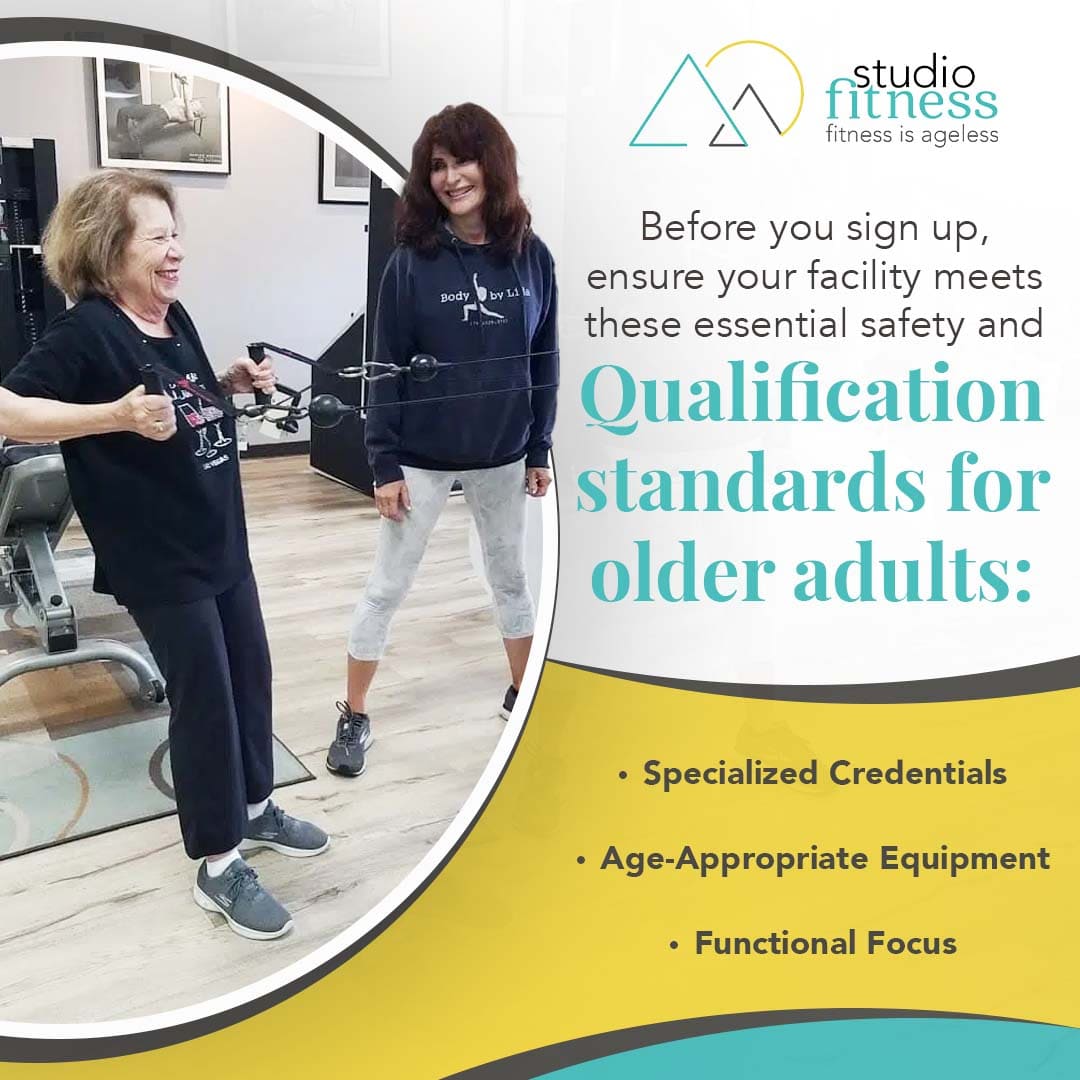
Not all fitness gyms for seniors employ trainers with the right credentials to work safely with older adults. Basic personal training certification provides foundational knowledge but doesn’t cover the specialized understanding required for age-related changes.
| Qualification Level | What It Covers | Relevance for Seniors |
| Basic Personal Training (CPT) | General exercise principles, healthy adult programming | Insufficient alone, lacks senior-specific training |
| Senior Fitness Specialist | Age-related changes, fall prevention, chronic condition considerations | Minimum standard for working with 60+ clients |
| Medical Exercise Specialist | Training around injuries, diseases, post-rehabilitation | Valuable for complex health histories |
| 5+ Years Senior-Focused Experience | Practical application of theory, pattern recognition for common issues | Often more valuable than additional certifications |
Key Qualifications to Verify
Look for trainers who hold certifications specifically in senior fitness or medical exercise from recognized organizations. These programs teach how osteoporosis affects exercise selection, why balance training must be progressive, and how common medications influence exercise response.
Experience matters as much as credentials. Ask how many current clients fall in your age range and how long those relationships have lasted. Turnover is a red flag, if clients don’t stick around, there’s usually a reason.
The Data Behind Qualified Training
According to the National Council on Aging, falls are the leading cause of fatal and nonfatal injuries among adults 65 and older, with one in four older adults falling each year. Strength and balance-based exercise interventions can help reduce fall risk in community-dwelling older adults, with some studies reporting reductions of up to 50%, depending on the program type, duration, and participant group.
Red Flags to Watch For
Trainers who minimize your concerns about joint pain, suggest pushing through discomfort, or promise rapid transformations lack the experience needed for safe senior training. Bodies over 60 build strength reliably but not quickly.
How the Right Trainer Adapts Exercises for Your Body’s Limitations
The difference between safe, effective exercise classes for seniors and programs that lead to injury often comes down to movement modification. Professional trainers working with older adults spend more time adjusting exercises than teaching them.
Assessment Comes First
At Studio Fitness, we understand that a thorough assessment isn’t a quick chat about your goals. It’s a systematic evaluation of how you move, where you feel restricted, what causes discomfort, and where you hold strength. Your trainer should watch you perform basic movements before prescribing any exercises.
Adapting for Joint Pain
Joint pain requires thoughtful modification, not avoidance. If squatting hurts your knees, the solution isn’t to skip leg training entirely. It’s to find the range of motion, stance width, and movement speed that allows you to build leg strength without aggravating the joint.
This might mean:
- Starting with partial-range movements
- Using support for balance
- Choosing different exercise variations altogether
- Slowing down each repetition for better control
Progressive Balance Training
Balance training follows a careful progression. You don’t start by standing on one leg with your eyes closed – you begin by narrowing your stance while holding support, then reduce the support gradually as stability improves.
Real Adaptation Examples
- A client with shoulder arthritis starts with light arm raises to 60 degrees, gradually expanding range as the joint tolerates more movement.
- Someone with balance concerns begins strength work seated or holding a rail, progressing to unsupported exercises only after demonstrating stability.
- A person with lower back sensitivity learns to maintain a neutral spine position during every exercise.
Workouts for seniors should feel challenging by the end of each set, but that difficulty should come from muscle fatigue, not joint pain or balance fear.
Questions to Ask Before Hiring a Senior Fitness Trainer
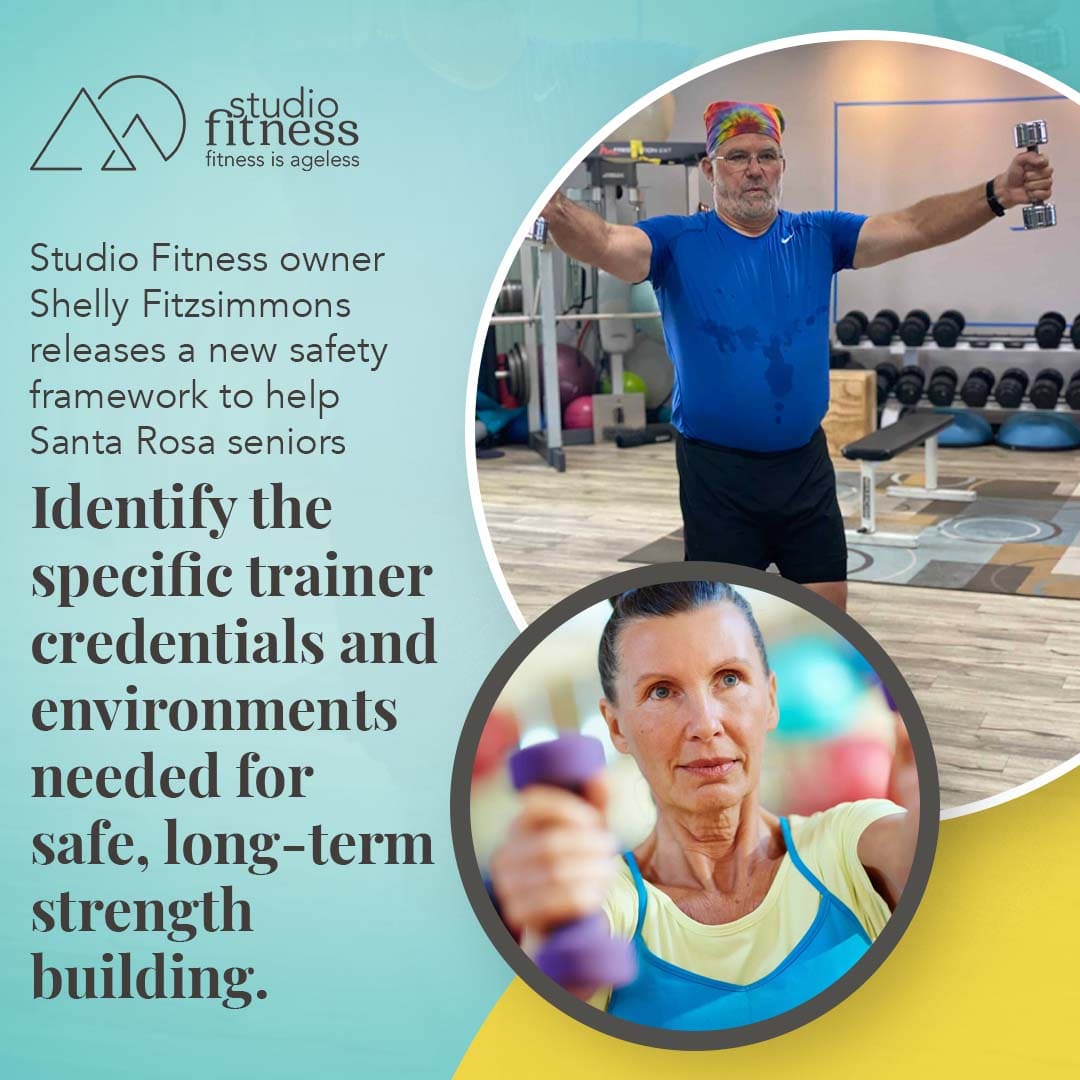
The right questions reveal more about a personal trainer for seniors than any resume or certification list. Studio Fitness suggests to ask for the following questions:
“What’s your experience specifically training adults over 60?”
Listen for specific numbers. “About 60% of my current client base is between 60 and 75, and I’ve been focusing on this population for the past eight years,” demonstrates real commitment.
“How do you modify programs for joint pain or past injuries?”
Generic answers like “we take it slow” suggest limited experience. Detailed responses that reference specific modifications indicate someone who regularly solves these problems.
“What’s your approach to balance and fall prevention?”
A trainer should be able to describe specific progressions: starting with stable positions, gradually reducing support, incorporating perturbation training, and integrating balance work into strength exercises.
“Can you show me sample programs for someone with my limitations?”
Trainers with experience will have these programs readily available because they use them regularly. Ask for examples relevant to your situation.
“How do you track progress for older adults?”
Progress looks different at 65 than at 25. Trainers should measure things like:
- How easily you rise from a chair
- How long can you balance on each leg
- How much has your mobility improved
- Confidence in daily activities
Not just pounds on the bar.
“What happens if I need to pause training due to health issues?”
Experienced trainers have protocols for safely resuming after breaks. They should describe how they restart at an appropriate level rather than assuming you’ve maintained all previous adaptations.
Finding the best gym for seniors near you requires finding trainers who answer these questions with specifics, patience, and genuine understanding.
The Training Environment: Why Location and Atmosphere Matter for Older Adults
Where you train matters almost as much as who trains you. The environment shapes whether you feel comfortable enough to train consistently.
Calm vs Chaotic Environments
When you’re learning new movement patterns or working on balance, you need to focus without distraction. Gyms for seniors with loud music, crowded spaces, and constant activity create cognitive load that interferes with motor learning.
Why Boutique Studios Work Better
Boutique studios typically serve seniors better for several practical reasons:
- Equipment is accessible without waiting or working around younger athletes
- Trainers know all clients by name and track individual progress
- The pace is slower and more deliberate
- Community is built among age-similar clients
Equipment and Safety Considerations
Key factors to evaluate:
- Enough space between machines to move safely
- Weight increments small enough for gradual progression (2.5-pound jumps)
- Chairs and benches with appropriate height and stability
- Grab bars and support rails where needed
The Community Factor
Training alongside people of similar age creates psychological benefits. When everyone around you is 25 and lifting heavy weights explosively, it’s hard not to feel out of place. Seeing others with similar limitations making progress normalizes your own journey.
Studio Fitness has deliberately created an atmosphere where older adults feel comfortable from their first visit. The environment stays calm and supportive, equipment is selected specifically for safe senior training, and the client community consists primarily of people facing similar challenges.
The best local gym for seniors is one where you feel comfortable, capable, and confident enough to keep showing up week after week.
What Results Actually Look Like: Realistic Expectations for Senior Fitness Training
Understanding what progress looks like for older adults prevents disappointment and helps you recognize genuine improvements. Fitness gyms for seniors should set expectations based on reality, not marketing claims.
Strength Timeline
Most older adults see measurable strength gains within 4-6 weeks of consistent resistance training. This means movements feel easier, you can handle slightly heavier weights with good form, and daily tasks require less effort.
What Progress Actually Means
Instead of focusing on pounds lifted, trainers working with older adults track functional improvements:
- Do you walk with more confidence?
- Can you get up from low chairs without using your hands?
- Do stairs feel easier?
- Can you reach the overhead cabinets you previously struggled with?
Consistency Over Intensity
Training twice weekly with appropriate challenges produces better long-term results than sporadic intense sessions. Your body adapts to regular stress applied consistently, not occasional maximum efforts.
Find Qualified Senior Fitness Training in Santa Rosa
Choosing the right trainer requires evaluating qualifications that go beyond basic certifications: specific experience with adults 60 and older, demonstrated knowledge of age-related conditions, thoughtful approaches to exercise modification, and commitment to creating safe, supportive training environments.
Studio Fitness has served the Santa Rosa and Sonoma County communities for decades with a specialized focus on clients who need training that prioritizes longevity, independence, and safety. Our trainers hold senior fitness certifications and bring years of practical experience working exclusively with older adults who have joint concerns, past injuries, balance deficits, and health conditions that require careful attention.
What sets our approach apart is the recognition that bodies over 60 need different programming, different progression speeds, and different measures of success. We’ve built our entire practice around this understanding, creating an environment where older adults feel comfortable, capable, and confident.
Ready to work with trainers who understand what your body needs? Call (707) 235-6426 to schedule a gym tour and fitness evaluation, or visit our Contact Page to get started. We serve clients throughout Santa Rosa and the surrounding Sonoma County areas.