

Bone density naturally declines with age, but strength training offers a proven, safe way to slow or even reverse this process. For adults over 60, particularly those diagnosed with osteoporosis or osteopenia, resistance exercise does more than build muscle. It stimulates bone cells to strengthen and adapt, reducing fracture risk and supporting long-term independence. Research published in peer-reviewed medical journals demonstrates that consistent, properly structured strength training can increase bone mineral density at the femoral neck, total hip, and lumbar spine in older adults, while also improving balance, coordination, and confidence in daily movement.
At Studio Fitness in Santa Rosa, we design senior fitness programs that prioritize bone health through controlled, progressive resistance work. Our certified trainers understand the specific needs of older adults with bone density concerns, creating workouts that challenge the skeletal system safely while building the muscle strength needed to protect against falls. Whether you're managing osteoporosis, want to prevent bone loss, or simply want to move with more confidence, strength training offers a realistic path forward. This article explains how resistance exercise rebuilds bone strength, what makes training safe for seniors, and how to start building stronger bones at any age.
Understanding Bone Density Loss and Why Strength Training Matters After 60
Bones aren't static; they constantly break down and rebuild through a process called remodeling. In younger adults, new bone formation outpaces breakdown, keeping bones strong. After about age 30, this balance shifts. For women, bone loss accelerates dramatically after menopause due to declining estrogen levels. Men experience a steadier but significant decline starting in their 50s. Without intervention, bones become porous, brittle, and prone to fractures from minor impacts or falls.
Osteopenia refers to lower-than-normal bone density that hasn't yet reached osteoporosis levels. Osteoporosis means bones have lost enough density that fractures become likely even with minimal stress. The CDC reports that the age-adjusted prevalence of osteoporosis was 12.6% among U.S. adults aged 50 and over in 2017–2018, rising to 17.7% among adults aged 65 and over. Prevalence was higher among women (19.6%) than men (4.4%).
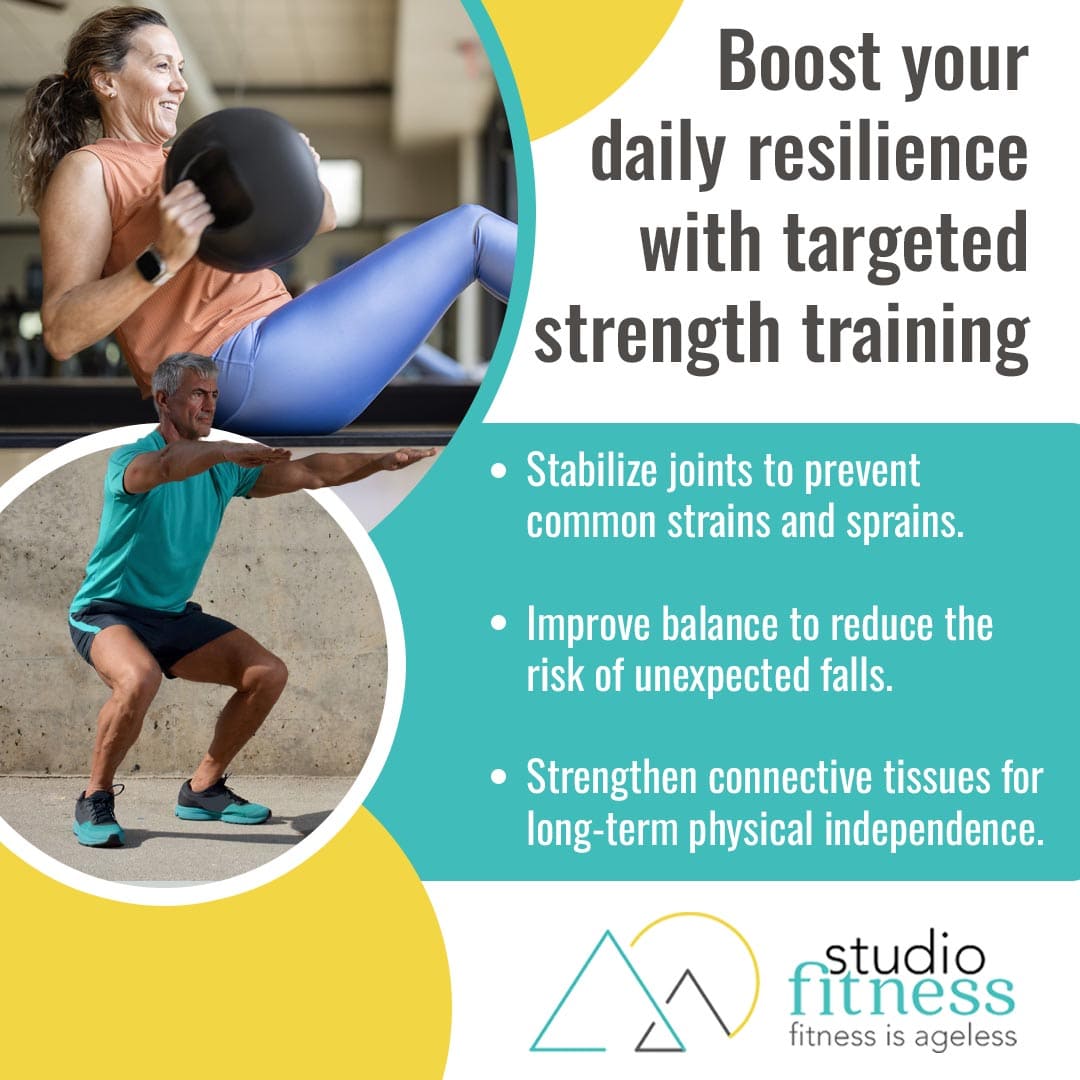 fall prevention, and improved independence. Studio Fitness logo included.” width=”600″ height=”600″ />
| Bone Health Statistics – U.S. Adults 50+ | Percentage |
| Overall osteoporosis prevalence (50+) | 12.6% |
| Osteoporosis in adults 65+ | 17.7% |
| Women 50+ with osteoporosis | 19.6% |
| Men 50+ with osteoporosis | 4.4% |
| Low bone mass prevalence (50+) | 43.1% |
Bone density matters because fractures don't just heal and disappear; they limit mobility, create chronic pain, and increase fear of movement. According to the International Osteoporosis Foundation, hip fractures are associated with substantial loss of function and independence. Mortality rates may reach up to 20–24% in the first year after hip fracture, 40% of survivors are unable to walk independently, 60% require assistance a year later, and 33% are totally dependent or in a nursing home in the year following a hip fracture. A wrist fracture from catching yourself during a fall can make daily tasks difficult for months. Spinal compression fractures can cause lasting height loss and postural changes.
Strength training for seniors at Studio Fitness helps address issues of bone loss by applying controlled stress to bones. When muscles pull against bones during resistance exercise, bones respond by depositing more mineral content, becoming denser and stronger. This mechanical loading is one of the few interventions proven to increase bone mineral density in older adults, making it a cornerstone of osteoporosis management and prevention.
How Safe Resistance Training Rebuilds Bone Strength in Older Adults
Bones adapt to the forces placed on them – this principle, called Wolff's Law, explains why astronauts lose bone density in zero gravity and why weight-bearing exercise builds it. During resistance training, muscles contract forcefully, creating tension that pulls on the bones they're attached to. This mechanical stress signals bone cells (osteoblasts) to lay down new bone tissue, gradually increasing density over time.
Not all exercise provides this benefit equally. Swimming and cycling, while excellent for cardiovascular health, offer minimal bone-building stimulus because they don't load bones against gravity or significant resistance. Weight-bearing activities like walking help maintain bone density, but lack the progressive overload needed to build it. Resistance training using free weights, machines, resistance bands, or body weight creates the targeted stress that stimulates bone growth.
For older adults, particularly those with existing osteoporosis, intensity and form matter more than volume. Workouts for seniors focused on bone health typically include:
- Multi-joint exercises that load major bone areas (squats for hips and spine, chest press for upper body, rowing for spine)
- Controlled movement speed to maintain proper alignment and reduce injury risk
- Sufficient resistance to challenge muscles without compromising form (typically 70-85% of maximum capacity)
- Adequate recovery between sessions to allow bone remodeling (48-72 hours)
Research published in Bone demonstrates that high-velocity resistance training performed twice weekly or more produces bone mineral density improvements ranging from 0.9% to 5.4% at the lumbar spine, total hip, and femoral neck. The key finding: benefits may be lost if training stops for more than six months, emphasizing the importance of consistent, long-term training.
What Makes a Senior Fitness Program Safe and Effective for Osteoporosis
Not all strength training is created equal when it comes to bone health in older adults. At Studio Fitness, we believe that a well-designed senior fitness program balances bone-building stimulus with injury prevention, particularly for clients with diagnosed osteoporosis or significant bone loss. The difference between beneficial training and risky exercise often comes down to movement selection, progression strategy, and individualized modifications.
High-risk movements to avoid or modify with osteoporosis include:
- Forward bending (flexion) of the spine, which increases the risk of a compression fracture
- Twisting movements that create shear forces on the vertebrae
- High-impact exercises like jumping or running, which can stress fragile bones
- Rapid, ballistic movements that reduce control and increase fall risk
Safe programming focuses on extension and neutral spine positions, controlled speeds, and supported exercises that reduce fall risk while maintaining bone-loading benefits. For example:
- Instead of forward toe touches: Hip hinges with proper spine alignment
- Instead of traditional crunches: Planks or standing core work
- Instead of jumping exercises: Step-ups or resistance band work
A personal trainer for seniors experienced in osteoporosis management assesses individual limitations before designing programs. This includes reviewing bone density test results (DEXA scan scores), understanding fracture history, and identifying movement restrictions. Training then progresses gradually, starting with bodyweight or light resistance and advancing only when form remains perfect and the client feels stable.
Professional guidance matters because the line between challenging bones enough to stimulate growth and overloading them to the point of injury can be narrow. Certified trainers adjust exercises based on real-time feedback, fatigue levels, and how the body responds from session to session. This personalized attention prevents the common mistakes that lead to setbacks: progressing too quickly, ignoring signals, or using improper form under fatigue.
Studio Fitness takes a methodical approach to senior strength training, particularly for clients managing bone density concerns. Sessions begin with thorough assessments, progress through carefully structured phases, and incorporate regular check-ins to adjust intensity as bone strength improves. The calm, supportive environment allows older adults to focus on movement quality without the distractions or intimidation factor of crowded gyms.
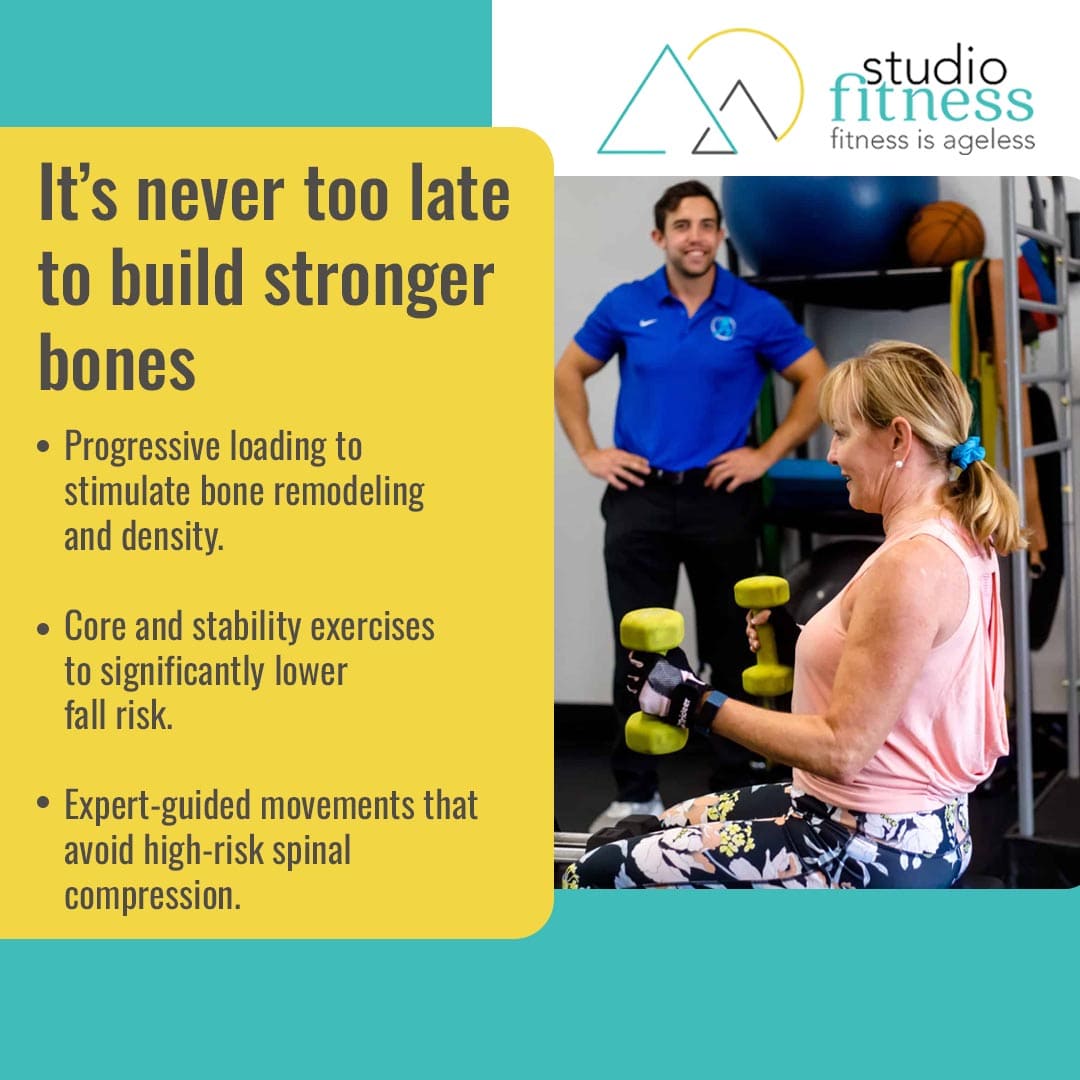
Beyond Bones: How Strength Training Protects Seniors from Falls and Fractures
Strong bones mean little if a fall occurs in the first place. The relationship between muscle strength, balance, and fall prevention creates a powerful protective effect that extends beyond bone density alone.
Strength training addresses fall risk through multiple mechanisms:
- Improved muscle power and reaction time: Stronger leg muscles allow quicker recovery when balance is disrupted. The ability to catch yourself, take a compensating step, or stabilize quickly can mean the difference between a near-miss and a fracture. Studies show that lower body strength directly correlates with reduced fall rates in older adults.
- Better proprioception and body awareness: Resistance training improves the nervous system's ability to sense body position in space. This heightened awareness helps navigate uneven surfaces, step over obstacles, or adjust to unexpected shifts in terrain—common scenarios where seniors lose balance.
- Enhanced core stability: A strong core provides the foundation for all movement, improving posture and reducing the postural sway that increases fall risk. Core work also protects the spine by distributing forces more evenly during daily activities.
- Increased confidence in movement: Fear of falling often creates a self-fulfilling cycle where reduced activity leads to further weakness and higher fall risk. Building strength through consistent training restores confidence, encouraging an active lifestyle that maintains both muscle and bone health.
When a slip or trip does occur, muscular protection becomes the last line of defense. Well-conditioned muscles also reduce the severity of impact by allowing controlled descent rather than a sudden, hard fall.
Finding the Right Fitness Gym for Seniors to Support Bone Health
Choosing where to train matters as much as what exercises you do. Not all fitness gyms for seniors understand the specific needs of older adults managing bone density concerns. The wrong environment can create unnecessary risk, while the right one provides the structure, knowledge, and support needed for safe, effective training.
Red flags when evaluating programs:
- Generic group classes that don't modify for individual limitations
- Instructors without certifications in senior fitness or osteoporosis management
- High-intensity interval training, marketed to all ages without adaptations
- Lack of assessment or screening before starting workouts
- Crowded, chaotic environments that increase distraction and injury risk
What to look for instead:
- Trainers with credentials specific to older adult populations, including experience as a personal trainer for seniors and certifications such as Senior Fitness Specialist.
- Programs that begin with movement assessments and bone density considerations
- Small group settings or one-on-one options that allow personalized attention
- Clear progressions that advance at your pace, not a predetermined schedule
- Calm, well-maintained spaces designed for safe movement
Exercise classes for seniors can work well for those with mild bone loss or as maintenance once a solid foundation is built. However, individuals with diagnosed osteoporosis or significant density loss typically benefit more from individualized training initially. One-on-one sessions allow trainers to monitor form closely, adjust resistance precisely, and modify movements based on daily variations in how you feel.
Questions to ask when choosing a trainer or facility:
- What experience do you have working with clients who have osteoporosis?
- How do you modify exercises for different bone density levels?
- What qualifications do your trainers hold for senior populations?
- Can you show examples of how you progress clients safely over time?
- What happens if I'm having a day where I feel less stable or more discomfort?
The fitness industry is full of well-meaning but under-qualified instructors when it comes to older adults. A trainer skilled in working with young athletes may lack the nuanced understanding of bone health, joint limitations, and appropriate modifications needed for seniors. Specialized knowledge in this population protects against the common pitfalls that lead to injury or ineffective programming.
Starting Strength Training Safely with Osteoporosis or Low Bone Density
Beginning strength training for seniors with bone density concerns requires patience and a clear plan. The timeline for bone density improvements is measured in months, not weeks, but the benefits to strength, balance, and confidence appear much sooner. Understanding what to expect helps maintain motivation during the gradual adaptation process.
Step one: Medical clearance and baseline assessment. Before starting, consult your physician and request a DEXA scan if you haven't had one recently. This bone density test provides a T-score that indicates your current bone health status and helps trainers design appropriate programming. Knowing your baseline also allows tracking progress with follow-up scans every 12-18 months.
Step two: Initial sessions focused on movement quality. Early training emphasizes learning proper form with light resistance or bodyweight. These sessions establish neural pathways, teach correct breathing patterns, and build confidence in movement. Expect to spend several weeks on foundational exercises before adding significant resistance. This isn't wasted time: it's the framework that makes advanced training safe and effective.
Step three: Gradual progression based on response. As movements become smoother and more controlled, resistance increases incrementally. Progression might look like:
- Weeks 1-4: Learning form, building work capacity
- Weeks 5-12: Adding resistance while maintaining perfect form
- Weeks 13-24: Progressive overload with heavier weights, more challenging variations
- Months 6-12: Continued advancement, potential bone density improvements visible on DEXA
Step four: Consistent scheduling and recovery. Bone remodeling happens during rest, not during exercise. Two to three training sessions per week provide enough stimulus without overloading the system. Rest days should include light activity like walking, but avoid heavy physical demands. Sleep, nutrition (particularly adequate protein and calcium), and hydration all support the adaptation process.
Realistic expectations for bone density changes:
- Muscle strength increases: Noticeable within 4-6 weeks
- Balance and coordination improvements: Evident within 8-12 weeks
- Bone density increases: Measurable on DEXA scans after 12-18 months
- Fracture risk reduction: Begins as soon as strength and balance improve
Success isn't just about numbers on a bone density test. Watch for these practical indicators:
- Walking feels more stable and confident
- Daily activities (carrying groceries, climbing stairs) become easier
- Standing posture improves without conscious effort
- Fear of falling decreases as physical capability increases
- Energy levels rise with improved functional capacity
Starting with realistic expectations and celebrating incremental progress maintains motivation through the months of consistent work required for bone adaptation. The process isn't quick, but it's one of the most effective interventions available for managing and reversing osteoporosis in older adults.
Build Stronger Bones with Safe, Personalized Training in Santa Rosa
If you're ready to address bone density concerns through proven, safe strength training, Studio Fitness offers specialized programs designed for older adults in Santa Rosa and Sonoma County. Our certified trainers understand how to build bone strength while protecting against injury, creating personalized workouts for seniors that match their current capabilities and progress at your pace.
Every program begins with a thorough assessment of your movement quality, bone health history, and individual goals. We work in a calm, supportive environment where you can focus on proper form without the distractions of crowded facilities. Whether you're managing diagnosed osteoporosis, want to prevent bone loss, or simply want to move with more confidence, we provide the knowledge and attention needed for lasting results.
Call us at (707) 235-6426 or email shelly@studiofitnesssantarosa.com to schedule a gym tour and fitness evaluation, or contact us to discuss how strength training can support your bone health and long-term independence. Building stronger bones starts with the right guidance – let's create your path forward.