
The Short Answer – and Why It's Hard to Find Online
Two to three days per week. That's the sweet spot for most adults 60 and older who want to build or maintain strength safely.
But if you've been searching for a straight answer online, you've probably run into conflicting advice – some sources say train every day, others say once a week is enough, and a few push six-day splits designed for competitive athletes in their 20s. No wonder it feels confusing.
At Studio Fitness, we work with adults who've waded through all that noise and simply want a clear, realistic path forward. This guide covers what the research actually shows, what major health organizations recommend, and what a practical weekly schedule looks like when it's designed for your body – not a 25-year-old's.
One important note before we go further: your ideal training frequency depends on your current fitness level, any injuries or health conditions, and how well you recover between sessions. Two days per week may be exactly right for one person and a starting point for another. A qualified trainer will help you figure out where you fall.
Why Training Frequency for Strength Training for Seniors Is Different
What Happens to Muscle After 60
Age-related muscle loss – clinically called sarcopenia – begins gradually in your 30s. According to the Mayo Clinic, muscle loss accelerates with aging, particularly after age 65, increasing the risk of weakness, falls, mobility limitations, and loss of independence without regular physical activity.
That's not a small number. And it explains why adults in this age group who feel weaker, less stable on their feet, or more fatigued by everyday tasks are not imagining it – they're experiencing a real physiological shift that responds well to structured resistance training.
The National Institute on Aging reports that muscle mass and strength peak between ages 30 and 35, then decline slowly at first, with the rate accelerating after 65 for women and 70 for men. The good news from four decades of NIA-supported research: this decline is not fixed. Strength can be built and maintained at any age with the right approach.
Your Recovery Timeline Has Changed
After a strength training session, your muscle fibers undergo controlled stress. The body repairs and rebuilds them stronger – that's how adaptation works. But how long that process takes is directly tied to age.
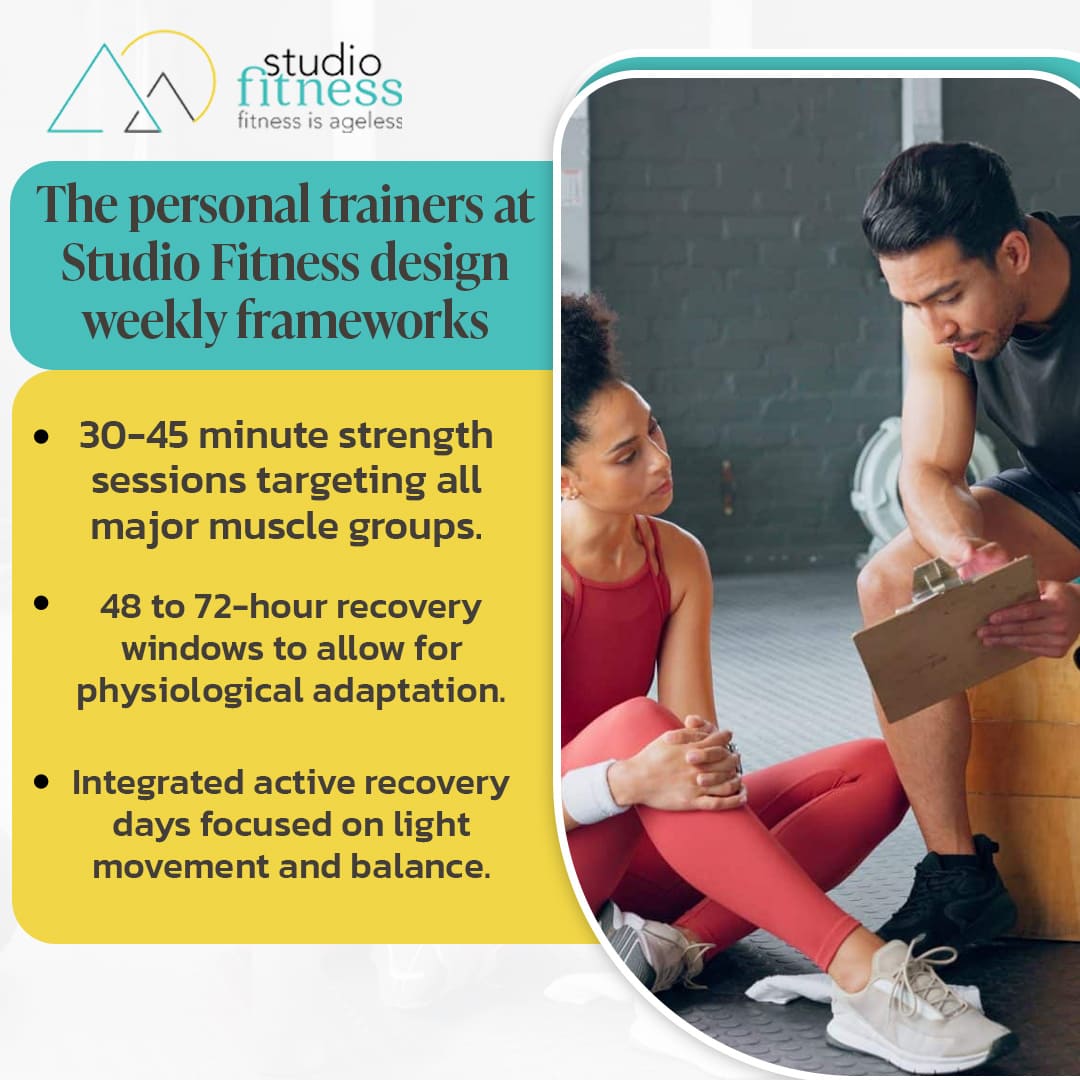
In your 30s, full muscle recovery from a training session typically takes 24 to 48 hours. By your 60s and 70s, that window commonly extends to 48 to 72 hours or more, depending on session intensity, sleep quality, nutrition, and overall health.
| Age Group | Typical Recovery Window After Strength Training |
| 30s | 24–48 hours |
| 40s–50s | 36–60 hours |
| 60s+ | 48–72+ hours |
These are general estimates. Individual factors – sleep, nutrition, stress, and health status – all affect actual recovery time.
This is why nonconsecutive training days aren't optional for older adults. They're built around how the body actually works at this stage of life.
The Role of Hormonal Shifts
Lower testosterone levels in men and estrogen shifts in women following menopause both affect how quickly the body responds to training and recovers between sessions. This doesn't make progress impossible – it doesn't. But it does mean that programming designed for a younger body often pushes older adults past their recovery capacity without producing better results. More sessions can actually slow progress when recovery is compromised.
How Many Days Per Week Should Seniors Strength Train, According to Health Guidelines?
What the Major Organizations Say
The core recommendation from the world's leading health and exercise bodies is consistent – and less complicated than the internet makes it appear.
| Organization | Strength Training Recommendation for Older Adults |
| CDC | At least 2 days per week of muscle-strengthening activities involving all major muscle groups |
| WHO | Muscle-strengthening at moderate or greater intensity, 2 or more days per week; multicomponent activity including balance, 3 or more days per week for fall prevention |
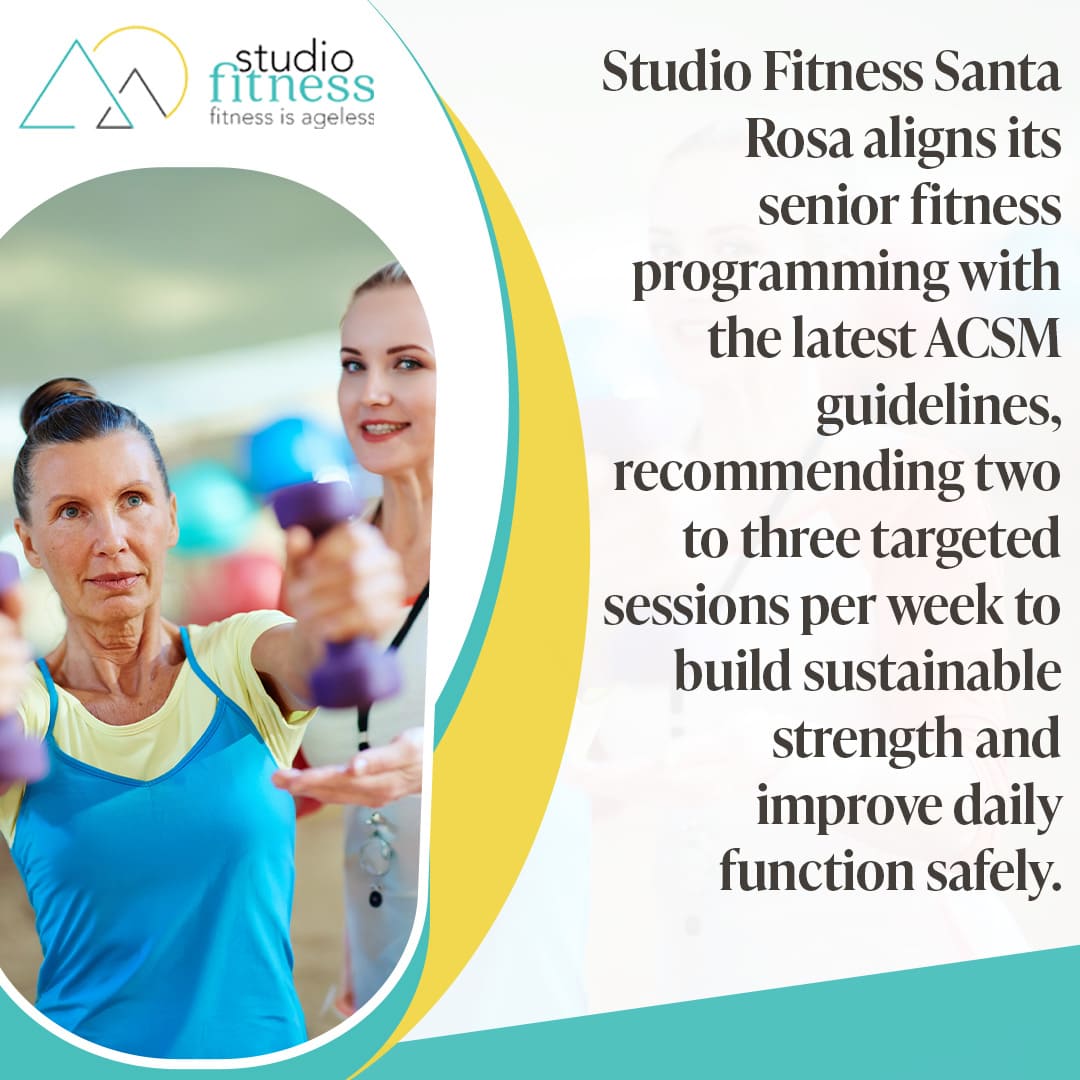
| ACSM | Resistance training 2–3 times weekly on nonconsecutive days targeting all major muscle groups, with long-term consistency prioritized over workout complexity. |
In March 2026, the American College of Sports Medicine published its first major resistance training update in 17 years – synthesizing data from 137 systematic reviews and more than 30,000 participants. The headline finding: the most meaningful gains come from moving from no resistance training to any consistent form of resistance training. For older adults and clinical populations specifically, the ACSM's updated guidance emphasizes two sessions per week covering all major muscle groups as the primary driver of meaningful, lasting adaptation.
What “2 Days Per Week” Actually Means in Practice
Meeting the guidelines is not just about showing up twice a week. What you do in those sessions is what determines results.
A productive strength session for older adults should:
- Cover all major muscle groups: legs, hips, back, core, chest, shoulders, and arms
- Use controlled movements with progressive resistance over time
- Be 30 to 45-minutes of focused, purposeful work – not 90-minute marathon sessions
- Include a structured warm-up and cool-down
- Reflect your current capacity, not a generic template
Frequency is one training variable. Intensity, form, load progression, and range of motion are what actually drive the body to adapt and get stronger.
Signs You're Training Too Much – or Not Enough
Overtraining Red Flags
More sessions are not always better – especially when recovery is the limiting factor. Watch for these signals between training days:
- Joint aches that don't clear up before your next session
- Persistent fatigue that doesn't resolve with a day of rest
- Declining performance, where exercises that felt manageable now feel harder
- Disrupted sleep, low mood, or persistent irritability
- Stiffness that feels worse after workouts than before
These are not signs of productive effort. They're the body's way of saying the recovery demand is exceeding what it can handle.
Signs You're Undertraining
On the other end of the spectrum, staying too far below an effective training stimulus produces no meaningful progress:
- No improvement in strength over weeks or months
- No noticeable change in how daily tasks feel – stairs, carrying bags, getting up from a chair
- Stiffness that doesn't improve with regular movement
- A growing sense of physical fragility or instability during daily activity
“Your body gives you feedback. The key is knowing how to read it – and having a trainer who does too.”
A qualified personal trainer for seniors in Santa Rosa doesn't just count reps. They track how you respond to training over time and adjust frequency, intensity, and volume when the signals point to too much, too little, or the wrong kind of stress.
How to Build a Safe Weekly Strength Training Schedule for Older Adults
A Practical Starting Framework
The table below shows a realistic week for adults 60 and older who are building toward two to three strength sessions per week. This is a starting point – not a one-size prescription.
| Day | Activity |
| Monday | Strength training (30–45 min) |
| Tuesday | Light walking, gentle stretching, or rest |
| Wednesday | Strength training (30–45 min) |
| Thursday | Balance drills + mobility work (20–30 min) |
| Friday | Optional third strength session or active rest |
| Saturday | Walking, outdoor activity, or light movement |
| Sunday | Rest or gentle stretching |
Non-lifting days are not wasted days. Walking, balance drills, and mobility work all reinforce what's being built in strength sessions – without adding significant recovery demand.
Session Length Matters More Than You Think
One of the most common mistakes is assuming a longer session equals a better one. For this population, workouts for seniors are most productive in a focused 30 to 45-minute window – not 90-minute sessions that accumulate fatigue without adding meaningful benefit. A session built around 5 to 7 compound movements – squats, rows, presses, hinges, and carries – targeting the major muscle groups is enough stimulus to drive real adaptation.
Warm-ups and cool-downs are not negotiable. They prepare joints for loading, reduce injury risk, and support cardiovascular regulation before and after effort. If you're skipping either to save time, you're trading safety for speed you don't need.
How Super Slow Training Changes the Equation
One specialized method used at our studio is super slow strength training – a technique built on significantly slower rep speeds (typically 10 seconds lifting, 10 seconds lowering) to maximize muscle fiber engagement while removing momentum-based joint strain.
When intensity is dialed up through controlled rep tempo, sessions are shorter, and recovery demand per session is managed more precisely. Many clients training this way see strong, consistent results on just two weekly sessions – fully within established guidelines and with plenty of recovery time built in.
How to Build a Senior Fitness Program You'll Actually Stick To
Motivation gets you started. It doesn't keep you going for two, five, or ten years. What actually drives long-term consistency is structure, accountability, and a program that fits your life without breaking your body.
The Case for Working with a Personal Trainer for Seniors
Harvard Health notes that a personal trainer for older adults can identify evolving fitness needs, teach proper form and execution, and keep clients focused and on track in ways that self-directed training rarely sustains. That's not a small thing – it's often the difference between a program that produces results and one that gets abandoned within a few months.
A qualified trainer does more than observe. They:
- Design a program built around your health history, limitations, and specific goals
- Build progressive challenge into every phase so you keep improving without plateauing
- Catch form and compensation patterns before they lead to injury
- Adjust the program when life disrupts your routine – travel, illness, or a difficult week
Studio Fitness structures programs around you, not around an average. That's a fundamentally different experience from dropping into group exercise classes for seniors at a large facility where everyone follows the same template regardless of individual history.
“The best senior fitness program is one you keep doing – not the hardest one you can survive.”
Long-term clients at our studio point to the same things when asked what keeps them coming back: a trainer who knows them, a routine that genuinely fits their life, and an environment that feels supportive rather than competitive.
How to Choose the Right Senior Fitness Gym in Santa Rosa
Not all workouts for seniors are the same. There's a real difference between a program built specifically for adults 60 and older – one that accounts for recovery windows, joint health, and long-term functional outcomes – and generic exercise classes for seniors where everyone follows the same format regardless of individual history or physical condition.
Questions Worth Asking Before You Commit
- Do the trainers hold current certifications from accredited organizations, and do they have specific experience with older adults?
- Does your first visit include a fitness evaluation and health history review, or are you handed a program on day one?
- Is programming individualized, or does everyone follow the same workout?
- What's the protocol for working around a past injury, current joint issue, or chronic health condition?
- How does the program evolve to keep producing results?
What Sets Specialized Senior Programming Apart
At Santa Rosa fitness gyms and studios working specifically with older adults, you should expect trainers who can speak clearly about progressive programming, injury adaptation, and safe loading principles for this age group. Credentials matter here because the stakes are higher – a program for a 68-year-old with a knee replacement or a history of osteoporosis requires a fundamentally different design than one built for a 35-year-old without those considerations.
Studio Fitness in Santa Rosa's trainers are all Certified Fitness Trainers (CFTs) with decades of combined experience in senior programming, injury adaptation, and specialized training methods, including Super Slow and Turbosonic vibration therapy. Their credentials and backgrounds are available on the trainers page.
To understand what personalized senior programming looks like here in practice, the senior fitness services page and strength training page both outline how sessions are structured, how programs evolve, and why long-term client retention at this studio looks different from what most gyms experience.
Find Out What the Right Senior Fitness Program Looks Like for You
Getting stronger, more stable, and more capable as you age is absolutely realistic. It starts with the right frequency, a program built for your body, and consistent support that keeps you moving forward.
Studio Fitness in Santa Rosa works with adults throughout Santa Rosa and Sonoma County who are ready to train with purpose. Our CFT-certified trainers build personalized strength training for seniors from where you are right now – not where a generic plan assumes you should be.
Call us at (707) 235-6426 to schedule a gym tour and fitness evaluation, or reach out through our Contact Page. One conversation gives you a clear picture of what your next step looks like.