
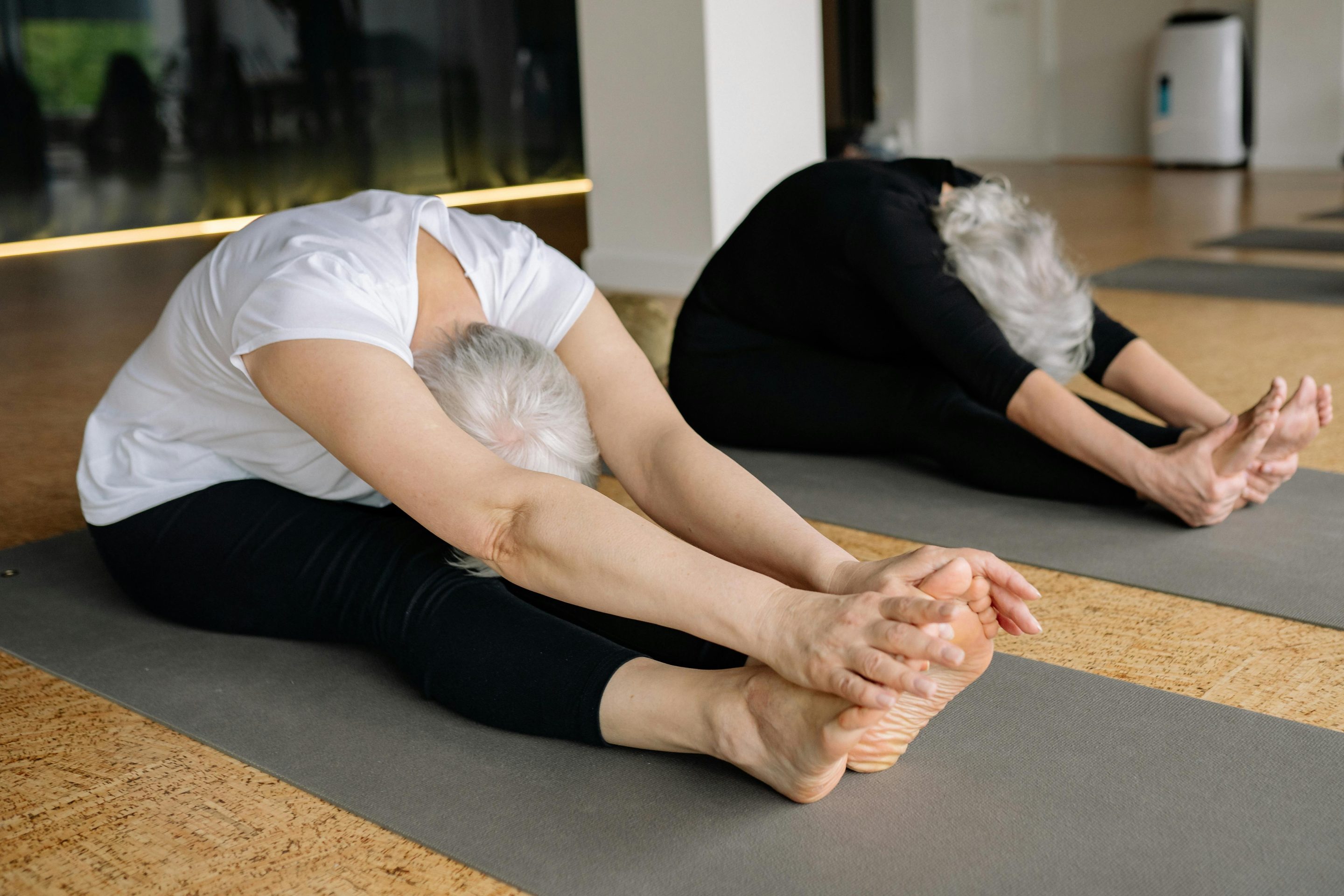
Balance decline after 60 isn't inevitable, and falls aren't just part of aging. Research shows that targeted strength training and balance exercises significantly reduce fall risk by rebuilding muscle strength, stability, and confidence. For seniors throughout Santa Rosa and Sonoma County, understanding how balance works and what exercises improve it provides a clear path toward maintaining independence.
According to the Centers for Disease Control and Prevention, one in four adults over 65 falls each year. Many of these falls result from preventable factors: weak leg muscles, poor core stability, reduced ankle mobility, and lack of practice with balance-challenging movements. Consistent training addressing these factors produces measurable improvements within weeks.
Studio Fitness specializes in helping older adults rebuild strength and stability through personalized senior fitness programs that account for current ability levels, past injuries, and individual fall concerns. The focus is on practical improvements for daily activities, walking confidently on uneven ground, navigating stairs safely, and maintaining balance when something unexpected happens.
Why Balance Declines After 60 (And Why It's Not Just About Getting Older)
Muscle Loss and Its Direct Connection to Stability
After age 60, adults lose approximately 3% of muscle mass per year without resistance training, with the fastest losses in lower body muscles controlling balance. Weaker hip muscles reduce your ability to catch yourself when stumbling. Reduced ankle strength limits adjustments on uneven surfaces. Diminished core strength makes maintaining an upright posture harder when something pushes you off balance.
This muscle loss directly impacts balance because muscles provide the strength needed for quick corrections when your center of gravity shifts. Strong muscles pull you back to stable positions before you fall. Weak muscles can't generate force quickly enough to prevent falls.
Standing on one foot requires significant hip, thigh, and ankle strength. Walking transfers full body weight onto one leg with each step. Climbing stairs demands even more single-leg strength and control. Without adequate muscle strength, these basic movements become increasingly risky.
How Vision, Inner Ear, and Proprioception Change With Age
Balance relies on three systems: vision, vestibular function (inner ear), and proprioception (body position awareness). Age-related changes affect all three. Vision declines, making distance judgment harder. Vestibular function deteriorates, reducing spatial orientation. Proprioception weakens, decreasing awareness of body positioning.
These sensory changes mean your brain receives less accurate information about position and movement. When one system provides unclear signals, your body relies more heavily on remaining systems. This explains why balance problems worsen in low-light conditions or on unfamiliar surfaces.
Proprioception decline particularly impacts balance because this sense tells you where joints are positioned without looking. Reduced proprioception means delayed awareness when your ankle rolls or knee drifts, increasing fall risk.
The Real Reasons Seniors Lose Confidence in Movement
Fear of falling often becomes more limiting than actual balance deficits. After experiencing a near-fall, many seniors restrict activities, avoiding stairs, uneven ground, or crowded spaces. This caution accelerates balance decline because reduced activity leads to weaker muscles and less practice with balance-challenging movements.
Confidence loss creates a negative cycle. Less activity means weaker muscles and worse balance, reinforcing fear and leading to more activity restriction. Breaking this cycle requires gradual exposure to balance challenges in controlled environments where falling isn't possible.
Data on Fall Risk Factors You Can Actually Control
Research published in the Journal of the American Geriatrics Society identifies modifiable risk factors:
| Modifiable Risk Factor (from multivariate studies) | Reported Association with Falls (Mean RR) | How Training Can Help |
| Lower-body (muscle) weakness | ~4.4× | Progressive strength training improves leg/hip strength, making standing, stairs, and balance recovery easier. |
| Balance deficit | ~2.9× | Balance drills (static + dynamic) improve stability, reaction time, and body control. |
| Gait deficit | ~2.9× | Strength + coordination work can improve walking mechanics, stride control, and confidence while moving. |
| Use of an assistive device | ~2.6× | Training may improve strength and stability, which can reduce reliance for some people (when clinically appropriate). |
| Vision deficit | ~2.5× | Exercise can’t fix vision, but it can improve posture, strength, and balance strategies to better compensate. |
| Arthritis | ~2.4× | Movement and strengthening can reduce stiffness, support joints, and improve functional mobility. |
These factors are controllable through consistent training. The highest-impact intervention is building lower-body strength, which directly addresses the primary physical cause of falls.
The Three Types of Balance Training That Actually Reduce Fall Risk
Static Balance: Building Foundational Stability
Static balance involves maintaining position without movement. Standing on one foot, holding a tandem stance, or standing on unstable surfaces challenge static balance. These exercises build foundational strength and body awareness for more complex balance work.
Training static balance teaches your body to make small, constant adjustments. These micro-corrections strengthen stabilizer muscles around ankles, knees, and hips while improving proprioceptive awareness.
Dynamic Balance: Moving Safely Through Space
Dynamic balance involves maintaining stability while moving. Walking heel-to-toe, stepping in different directions, turning while walking, or moving while carrying objects challenge your ability to control the center of gravity during movement.
The key is practicing weight transfers, shifting from standing on both feet to one foot. Falls often occur during these transitions, so training these movements builds confidence for real-world situations.
Reactive Balance: Catching Yourself When Something Shifts
Reactive balance is your ability to recover when unexpected disruptions happen. Training involves controlled perturbations, stepping onto unstable surfaces, catching yourself from controlled leans, or responding to gentle pushes from different directions.
This training rehearses specific scenarios that lead to falls. Your body learns these recovery patterns, making appropriate responses more automatic when real disruptions occur.
How Strength Training Supports All Three Balance Types
Strength training provides the foundation that makes balance possible. Strong muscles generate the force needed for balance corrections. Hip abductors pull you back to center when leaning sideways. Ankle muscles adjust position on uneven ground. Core muscles maintain upright posture against destabilizing forces.
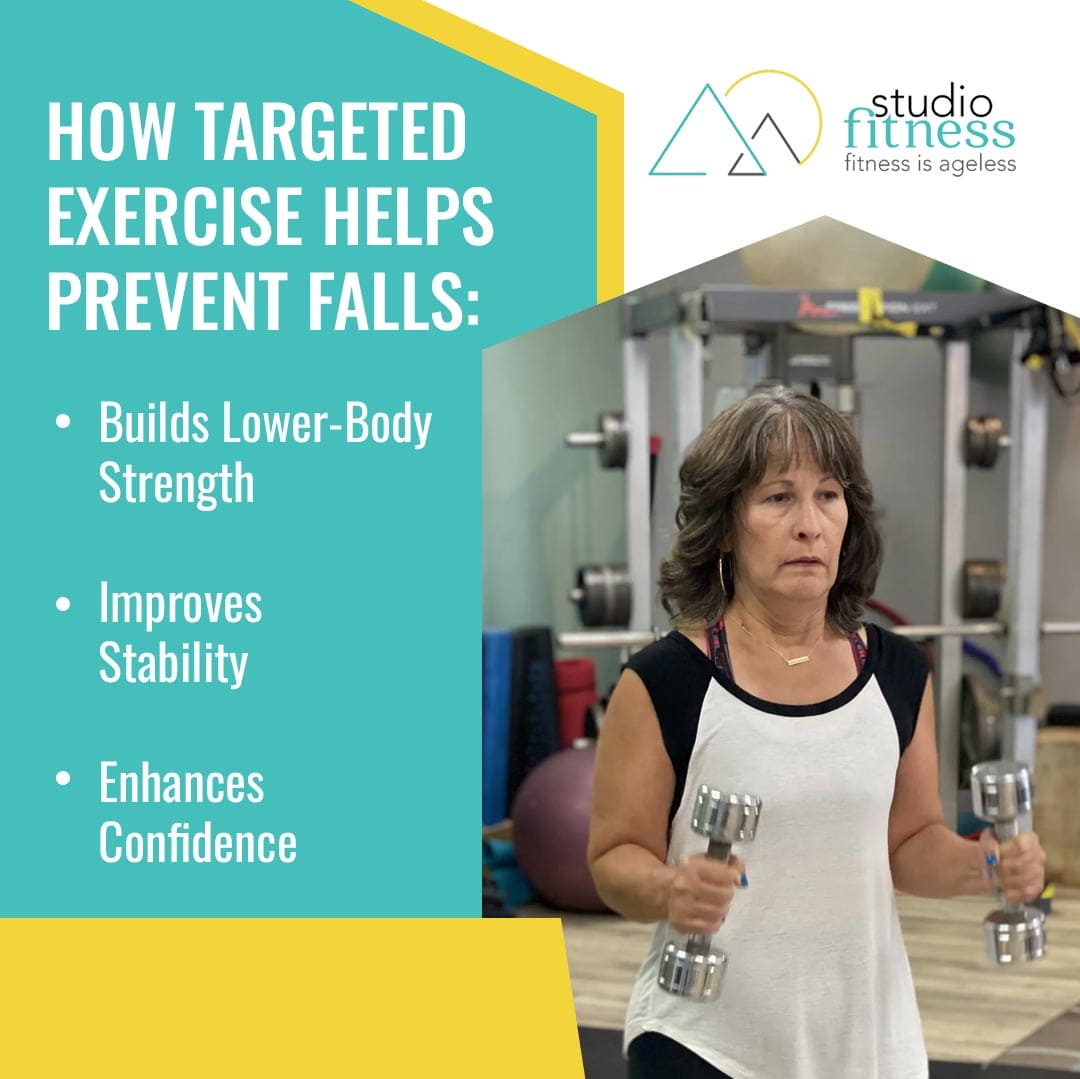
Research published in the British Journal of Sports Medicine demonstrates that exercise programs reduce fall rates in community-dwelling older adults by 21% overall, with programs that challenge balance and involve more than 3 hours weekly showing 39% reduction in falls.
At Studio Fitness, workouts for seniors integrate strength training for seniors with balanced work rather than treating them separately, recognizing that improvements in one area directly support improvements in the other.
Strength Training Exercises That Build Balance and Prevent Falls
Lower Body Exercises That Stabilize Hips, Knees, and Ankles
Hip strength controls your center of gravity during standing and walking. These strength training for seniors exercises include:
- Hip abduction – Strengthens muscles that prevent your hips from dropping when standing on one leg
- Hip extension – Builds glute strength that stabilizes your pelvis during walking
- Squats and sit-to-stand – Develops coordinated strength across hips, knees, and ankles
- Step-ups – Mimics stair climbing while building single-leg strength and balance
Ankle strength matters because ankles make constant small adjustments to maintain balance. Calf raises, ankle dorsiflexion exercises, and balance work on unstable surfaces strengthen muscles controlling ankle position.
Core Strengthening for Upright Posture and Control
Core muscles maintain trunk position and transfer force between the upper and lower body. Weak core muscles allow excessive torso shifting during movement. Strong core muscles keep the center of gravity stable and controlled.
Core training for balance focuses on maintaining positions against resistance. Planks, standing exercises with resistance, and rotational movements build functional core strength supporting balance during daily activities.
Single-Leg Work That Mimics Real-World Movement
Single-leg exercises provide the most direct transfer to balance improvement because they replicate the stability demands of walking, climbing stairs, and navigating obstacles. Every step involves a moment of single-leg balance.
Single-leg exercises range from simple static holds to complex movements like single-leg deadlifts, step-ups, or lunges. Beginners hold onto support initially, gradually reducing assistance as strength and confidence improve.
Progressive Overload for Seniors – Safe Intensity Increases
Progressive overload means gradually increasing training difficulty. For balance and strength training, this involves adding resistance, increasing repetitions, reducing support, or advancing to more challenging variations.
Safe progression might move from sitting to standing squats, then bodyweight squats with support, then unsupported bodyweight squats, and eventually squats with added resistance. Each step builds capability for the next advancement.
How Often Seniors Should Train for Balance Improvement (Based on Research)
Minimum Effective Frequency for Balance Gains
Balance-specific training at least twice weekly produces measurable improvements, with three sessions per week showing optimum results. These workouts for seniors need only 20 to 30 minutes of focused balance work combined with strength training.
Improvements typically appear within 4-8 weeks of consistent training, though timelines vary based on starting ability level.
Combining Strength Work With Balance-Specific Training
The most effective fall prevention programs combine strength training with dedicated balance work. Exercise classes for seniors might include strength exercises followed by balance challenges, or alternate between the two throughout the workout.
This combination recognizes that strength provides physical capability for balance, while balance-specific work develops coordination and confidence to use that strength effectively.
Rest and Recovery Needs for Older Adults
Recovery becomes increasingly important with age. Most seniors benefit from rest days between strength and balance training sessions, though light activity like walking can occur on rest days.
Signs of insufficient recovery include persistent soreness, decreased performance, increased instability, or unusual fatigue. Trainers adjust training frequency and intensity based on these indicators.
Measuring Progress: What Improvement Actually Looks Like
Balance improvements often appear subtly before becoming obvious. You might notice walking feels steadier, you catch yourself more easily when stumbling, or you feel more confident on uneven ground.
Objective measures of progress include:
- Increased duration of single-leg stands
- Reduced need for support during balance exercises
- Improved performance on timed up-and-go tests
- Greater confidence during challenging movements
- Fewer near-fall incidents during daily activities
Studio Fitness trainers document these metrics to demonstrate progress over weeks and months, helping you recognize gradual improvements.
Training Safely When You Already Have Balance Issues or Fear of Falling
Starting Points for Different Ability Levels
Workouts for seniors in Santa Rosa must match their current ability level. Beginners with significant balance concerns start with seated exercises, progressing to standing work with substantial support. Those with moderate balance abilities begin with standing exercises using light hand support. People with relatively good balance start with more challenging single-leg and unstable surface work.
Assessment observes how you perform basic movements like sitting to standing, walking, and standing on one foot. This information guides initial program design and progression planning.
How Trainers Modify Exercises for Stability Concerns
Exercise modifications allow work on balance and strength regardless of current ability. Common modifications include:
- Adding hand support – Holding onto a stable surface like a chair or countertop
- Reducing range of motion – Performing partial squats instead of full-depth movements
- Decreasing single-leg demands – Keeping the toe down for light support during balance work
- Using more stable surfaces – Training on firm ground instead of foam pads or unstable platforms
- Shortening exercise duration – Performing shorter holds or fewer repetitions initially
These make exercises achievable now while maintaining the stimulus needed for improvement. As capability increases, modifications are gradually removed.
Using Support and Assistive Tools Strategically
Support tools like parallel bars, sturdy chairs, or balance trainers serve as temporary aids during skill development. The goal is to use support when needed for safety while systematically reducing dependence as capability improves.
Using appropriate support allows safe practice of challenging movements that build the strength and skill needed to eventually work without assistance.
Building Confidence Through Gradual Progression
Confidence rebuilding requires repeated success with progressively more challenging activities. Starting with exercises you can complete safely creates positive experiences that motivate continued effort. Small progressions maintain momentum while steadily expanding capabilities.
Balance improvements require weeks of consistent training. Celebrating small victories maintains motivation during the weeks needed to achieve larger goals.
What to Look for in Senior Fitness Programs and Balance Training in Santa Rosa
Trainer Qualifications for Senior Populations
When choosing a Santa Rosa personal trainer for seniors, look for certifications in senior fitness, corrective exercise, or special populations from organizations like NASM, ACE, NSCA, or ACSM. These indicate focused education on age-related changes, fall risk factors, and appropriate exercise modifications.
Beyond certifications, practical experience matters. Trainers who regularly work with older adults understand common concerns, communicate clearly about balance and safety, and modify exercises quickly when needed.
Small Group vs. Personal Training for Balance Work
Personal training provides individualized attention, customized progression, and focused work on specific limitations. Exercise classes for seniors offer social connection, shared motivation, and often lower cost.
Those with significant balance concerns, complex health histories, or strong preferences for privacy often benefit most from personal training. People who enjoy social activity may thrive in small group settings.
Studio Fitness offers both personal training and small group options for seniors, recognizing that different people need different training formats to remain consistent and motivated.
Environment and Equipment That Supports Safe Training
When evaluating Santa Rosa fitness gyms for seniors, look for facilities with adequate space for movement, appropriate flooring providing traction, and sufficient equipment for progressive training. Safety features like sturdy support structures, proper lighting, clear pathways, and equipment designed for senior use reduce injury risk.
The atmosphere should feel welcoming and calm. Seniors working on balance often feel vulnerable during training, so a supportive environment makes consistent participation more likely.
Programs Designed for Longevity, Not Quick Fixes
Effective balance programs focus on sustainable, long-term improvement. Fall prevention requires ongoing maintenance, and balance abilities decline again if training stops. Look for programs emphasizing skill development, habit formation, and realistic timelines.
Be cautious of programs promising dramatic results in very short timeframes or using high-intensity approaches that may increase injury risk. Sustainable balance improvement comes from consistent, appropriately progressed training over months and years.
Improve Your Balance and Confidence
Balance decline and fall risk aren't inevitable parts of aging. Targeted strength training combined with balance-specific exercises produces measurable improvements in stability, confidence, and fall prevention within weeks of consistent training.
Studio Fitness in Santa Rosa specializes in senior fitness programs that address balance concerns through personalized strength and stability training. The trainers understand the physical and psychological challenges of balance issues and create safe, progressive programs that rebuild capability while respecting current limitations.
If you're concerned about balance, have experienced falls or near-falls, or simply want to maintain stability and independence as you age, call (707) 235-6426 or email shelly@studiofitnesssantarosa.com to schedule a gym tour and fitness evaluation. You can also visit the contact page to learn more about senior fitness programs designed specifically for balance improvement and fall prevention.